Options · The blog
How much money do you need to trade options? Start from the risk, not the minimum
The short answer
Frank has $900 and a browser full of encouragement. The articles say options are the affordable way in: a few hundred dollars is plenty, one even says $100 will do. Then he opens his broker’s options application, and the form asks how much he earns, what he is worth, how many years he has traded, and what he intends to do with these contracts. The distance between those two conversations is the honest answer to this question. The marketing wants to know if he can afford one trade. The application is legally obliged to ask a better question: whether he can afford the activity.
So this article answers the money question the way the rules and the data actually frame it, in three layers. What the rules require, which is less than most people think. What people actually trade with, which is now measured. And the number nobody publishes because it is different for every reader: the account size that follows from the size of loss you can afford to repeat, since repetition, not entry, is the expensive part of options.
The minimums, and what each one is actually for
Start with the rules, because the folklore here is dense and some of it expired mid-2026. The regulatory architecture has three layers, and none of them is a number invented by a blog.
Buying options in a cash account has no legal minimum. The Federal Reserve’s Regulation T, the rule that governs how brokerage purchases are financed, requires that cash-account purchases be paid in full; for listed options specifically, its margin supplement hands the detail to SEC-approved exchange rules, and the practical effect for a buyer is simple: you pay the whole premium, and the whole premium is all you need. A $1.40 contract costs $140, fully paid, no leverage involved. There is no floor under that beyond the price of the contract itself.
A margin account, which most brokers require before you can trade spreads or sell options, has a real floor: $2,000, FINRA’s minimum equity for trading on margin. And the famous third number is gone: the $25,000 pattern day trader requirement, still repeated as current by most of what you will read on this question, was retired by FINRA effective June 4, 2026, replaced by intraday margin standards that firms phase in through October 20, 2027. Day trading options on margin still has gates; they are simply measured intraday now rather than as a fixed dollar threshold. If a page tells you $25,000 is the law, that page predates the change, which is worth knowing as a freshness test for everything else it says.
The gate that is not a dollar amount at all: approval. FINRA requires brokerage firms to approve every account for a specific level of options trading before it can trade them, precisely because some strategies carry substantial risk. That is why Frank’s form asks about income, net worth, and experience. The levels ladder upward from positions fully backed by stock or cash toward spreads and, granted last, uncovered selling. Notice what the levels gate: obligations, not spending. No approval level exists to protect you from buying too many cheap calls.
The gates specific to options
| The gate | What it actually requires |
|---|---|
| Buying an option in a cash account | No legal minimum; Regulation T requires full payment of the premium |
| A margin account, prerequisite for most spreads and selling | $2,000 minimum equity, per FINRA |
| Day trading options on margin | The $25,000 pattern-day-trader floor was retired effective June 2026; intraday margin standards now apply |
| Any options trading at all | Firm approval for a specific level of options trading, per FINRA |
Buying an option in a cash account
What it actually requiresNo legal minimum; Regulation T requires full payment of the premium
A margin account, prerequisite for most spreads and selling
What it actually requires$2,000 minimum equity, per FINRA
Day trading options on margin
What it actually requiresThe $25,000 pattern-day-trader floor was retired effective June 2026; intraday margin standards now apply
Any options trading at all
What it actually requiresFirm approval for a specific level of options trading, per FINRA
What people actually trade with, now that someone measured it
For decades the true answer to “what does a typical options account look like” was a shrug. That changed when three researchers at London Business School isolated retail options trades in market-wide transaction data. Their study, published in the Journal of Finance in 2023, found retail activity had grown to over 60% of total options market volume, and drew a portrait of what all those accounts were doing: “Retail investors prefer cheaper, weekly options with average bid-ask spread of 12.6%, and lose money on average.”
Sit with that spread figure for a moment, because it is the tax on being small. Trades above $20,000 were less than a tenth of the volume in their transaction data; the market’s business is overwhelmingly small trades in cheap, short-dated contracts, and cheap contracts carry proportionally the widest spreads. Twelve point six percent is the average gap between the buying and selling price on the contracts retail prefers, charged in both directions. Across their sample window, from November 2019 to June 2021, retail options traders lost $2.1 billion in aggregate, and the researchers’ accounting points at the door fee rather than bad luck: measured against the midpoint of quoted prices, aggregate trading costs came to $6.4 billion. The small-account style this question usually has in mind, a few hundred dollars cycling through cheap weekly contracts, is precisely the style their data shows paying the highest percentage costs. On some platforms, they note, weekly options are the default tab.
None of that says a small account is forbidden. It says a small account playing the default game is a toll booth’s favorite customer, and that the question “how much do I need” is inseparable from “how often will I pay the toll, and at what percentage.”
The job decides the money, before any formula does
There is one more reason the one-number answers disagree with each other: they are answering for different jobs, and the jobs have wildly different price tags. Before any division gets done, be clear about which of these you actually mean when you say you want to trade options, because the entry cost is a property of the job, not of the market.
Buying direction is the cheap door: a call or a put, paid in full, whole premium at risk. The contract’s price is the entire requirement, which is why every “you can start with $100” article is technically telling the truth about this one job and quietly generalizing it to all the others.
Income against shares you own is not cheap, because the shares are the requirement. A covered call is written against 100 shares, so on a $40 stock the real minimum is roughly $4,000 of stock you already hold; the option side of the trade adds income to a position, it does not replace the position. Anyone selling covered calls without the shares is not running an income strategy; they are short an uncovered call, which is a different activity with a different approval level and a different worst case.
Cash-secured puts, the other beginner-approved way to sell, reserve the full purchase price: sell the $45 put and your broker sets aside $4,500 against the possibility of buying the shares. The premium collected is real income only against that reserved capital, which is the denominator most income pitches leave out.
Spreads need the $2,000 margin account plus the defined risk of each position, and uncovered selling needs the top approval tier plus margin sized by exchange rules, and is the one job on this list where the account itself is the worst case. The pattern across all five is worth stating plainly: the more a strategy earns its keep by collecting premium rather than paying it, the more capital it demands as collateral, because the market does not pay people to hold obligations for free. If your interest in options is the income pitch, your real question is not this article’s title; it is whether you have the collateral the income is rented against.
The number to compute instead
Here is the reframe that turns this from a folklore question into an arithmetic one. Every published minimum answers “how much to place a trade.” The number that decides whether options are viable for you answers something else: how much account does it take to survive being wrong at a size you can repeat? Being wrong is not the failure case in options; it is the operating condition. Buyers of options are wrong profitably all the time, the way insurers pay claims profitably, but only when no single loss matters much. So compute your account from the loss, backwards.
Backing the account size out of the risk
- 1
Price the real worst case of your cheapest defensible trade
For a bought call or put, the whole premium. For a defined-risk spread, the width minus what you collected. Suppose it comes to $180.
- 2
Set the share of the account one loss is allowed to take
Serious risk discipline lives in low single digits per trade. Pick 2% if you want losses to be forgettable; 5% is already loud.
- 3
Divide the first number by the second
$180 at 2% implies a $9,000 account. At 5%, $3,600. This is arithmetic, not advice: change the inputs and the output follows.
- 4
Compare with what you actually have
If the answer dwarfs your balance, the account is not wrong; the trade size is. Find a cheaper defined-risk structure, trade less often, or wait.
Run Frank through it. His cheapest defensible defined-risk trade risks $180; his $900 account means every such loss takes 20% of everything. Three bad weeks, entirely ordinary in this instrument, and half his stake is gone, not because he chose badly but because he was sized so that ordinary variance was fatal. Reverse it and $900 is not banned from options; it is banned from frequency. A position or two a month, fully paid, genuinely affordable to lose, with the rest of his saving building the account: that is what his number honestly buys in 2026, and it is more than the $100 articles admit and less than they imply.
What the money cannot buy
Whatever number the arithmetic hands you, it has a jurisdiction, and the jurisdiction is money that could vanish without touching the life around it. Nothing earmarked for rent, nothing with a due date, nothing whose loss you would have to explain to anyone, including yourself, in a month when the account is down. That is not a moral position; it is an operating requirement, because the sizing discipline above only works when a string of losses is an inconvenience rather than an event.
One more layer past that, because it is the one the “how much money” framing hides. Past the minimums, a bigger account buys durability, cheaper percentage costs, and calmer sizing. It does not buy an edge. The retail losses in the Journal of Finance data were not concentrated among the smallest accounts because small accounts pick worse stocks; the losses ride on costs and short-dated contracts, and a larger balance running the same style simply pays the same fees in larger units. Money is the fuel of this activity, not the skill of it, and the skill has to be built deliberately: how positions are sized against their real worst case, what margin actually reserves and why the reserve grows at the worst moments, and when a defined-risk structure genuinely beats a cheap lottery-shaped contract. That is exactly the material of Chapters 41 and 42 of The Complete Guide to Options Trading, which translate everything this article computed by hand into a working discipline, and they are the two chapters I would hand anyone whose next step is funding the account rather than reading more blogs.
The form Frank filled in asks his net worth because the industry learned, expensively, that the affordability of one trade and the affordability of the activity are different questions. Answer the second one before your first premium leaves the account, and every minimum here becomes what it always was: paperwork, comfortably below your own number.
Keep going
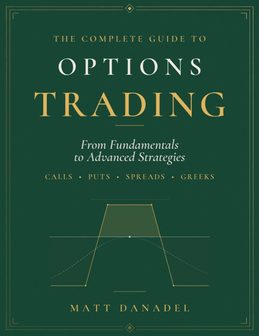
The Complete Guide to Options Trading$99.99
This article computed one number; the book builds the whole discipline around it. Chapter 41 of The Complete Guide to Options Trading turns risk-per-trade into position sizes for every strategy in the library, and Chapter 42 explains what your broker's margin actually reserves and why it grows exactly when you least want it to. The shelf also pairs it with The Complete Trader in the bundle, and the sizing chapters of the two are close cousins. What no chapter will do is make a small account outrun its own arithmetic. It will teach you to stop asking it to.
Questions, answered straight
Can you trade options with $100?
Mechanically, yes: plenty of listed options cost less than $100 per contract, and a cash account has no minimum beyond the premium itself. What $100 cannot buy is repetition. One cheap contract is a single all-or-nothing outcome, and a single outcome teaches almost nothing and forgives even less. If $100 is genuinely what you have, the sensible uses are learning and small, infrequent positions you fully expect to be able to lose.
Do you need $25,000 to day trade options?
No, and the sources still saying so are out of date. FINRA retired the $25,000 pattern day trader requirement effective June 4, 2026, replacing it with intraday margin standards that firms phase in through October 2027. Day trading on margin still requires a margin account and still carries real gates; they are now set by intraday margin monitoring rather than a fixed dollar floor. Cash accounts were never subject to the $25,000 rule at all.
How much money do you need to sell options?
More than to buy them, because selling creates obligations. A covered call needs the 100 shares behind it, which for most stocks means thousands of dollars. Cash-secured puts need the full purchase price of the shares in reserve. Uncovered selling sits behind the highest approval level at most firms, with margin requirements set by exchange rules, and it is the one corner of options where losses can exceed the account. Whatever a seller's account holds, the obligation is the real minimum.
What are options approval levels?
Tiers of permission your brokerage assigns when you apply to trade options, based on your finances, experience, and objectives, because FINRA requires firms to approve accounts for a specific level of options trading. Lower levels cover positions backed by shares or cash; higher levels admit spreads and, last of all, uncovered selling. The levels gate which strategies you may use, not how much money you may spend inside them.
Keep reading
Everything here is education, not financial advice. How I source numbers and handle corrections: Editorial standards. The full risk language: Disclaimer.